

THANK YOU FOR SUBSCRIBING
Weekly Brief
Be first to read the latest tech news, Industry Leader's Insights, and CIO interviews of medium and large enterprises exclusively from Healthcare Tech Outlook


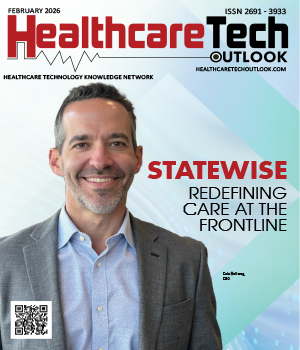
 Cole Ballweg, CEO, Statewise
If documentation slows care or introduces compliance risk, both sides lose.
That tension shaped Statewise from day one. The company builds Medicaid software specifically for authorized care, guiding documentation, workflows, clinical compliance, and revenue operations through mobile and web tools designed for the people actually doing the work.
Most systems try to force Medicaid into platforms designed for commercial payers. Statewise did the opposite. It is built around the way Medicaid agencies actually operate.
“We design for the people who don’t sign the contract but carry the burden every day,” says Ballweg. “If the system doesn’t work for them, nothing upstream or downstream works either.”
Built for Authorized Care
Statewise’s architecture is intentionally simple on the surface and flexible underneath. The goal is to keep the user experience free of complexity while adapting to state-by-state Medicaid rules.
Instead of adding custom layers for every request, the team looks for shared patterns across markets and builds solutions that scale without creating technical sprawl. The result is software that adjusts to regulatory variation without becoming harder to use.
That balance between frontline usability and operational control shows up across the platform. Workflows guide staff step by step, helping ensure documentation is complete and compliant before claims ever leave the agency—because in Medicaid, mistakes upstream become denials, rework, and lost margin downstream.
Compliance Without Compromise
The philosophy is rooted in lived experience. Before founding the company, members of the team carried licensure responsibility and managed frontline caregivers directly. Compliance was not theoretical. Missed details meant penalties, payment delays, and real operational risk.
Compliance at Statewise is treated as operational protection, not a reporting exercise.
Critical documentation avoids long free-text notes that create ambiguity during audits. Instead, structured fields, predefined language, and guided inputs create clear, defensible records that stand up to review and aggregate cleanly for outcomes and billing.
-
We design for the people who don’t sign the contract but carry the burden every day.
The philosophy is rooted in lived experience. Before founding the company, members of the team carried licensure responsibility and managed frontline caregivers directly. Compliance was not theoretical. Missed details meant penalties, payment delays, and real operational risk.
“Compliance can’t take a backseat,” Ballweg says. “We built this because we’ve lived what happens when documentation breaks down.”
That perspective drives everything from the clinical suite to onboarding. Agencies can deploy through the Bring Your Own Device (BYOD) mobile app, reducing hardware costs while guiding staff through compliant documentation from day one. Customer success teams support implementation to help agencies reach clean claims faster.
Smarter Workflows, Cleaner Claims
Customization is allowed where agencies need flexibility, such as how authorizations are obtained. But once care is authorized, the system becomes intentionally rigid. Scheduling, documentation, and service delivery must follow the authorization exactly. That structure is deliberate. In low-margin Medicaid environments, clean claims are not a billing function. They are the result of disciplined workflows at the point of care.
Statewise is extending that logic into automated scheduling, revenue cycle support, and targeted AI tools focused on quality assurance and operational efficiency. The goal is not automation for its own sake, but removing friction so staff can spend more time with families and less time correcting paperwork.
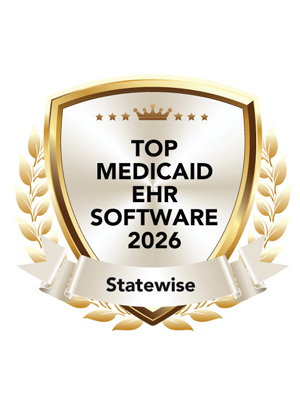
By aligning documentation, compliance, scheduling, and billing around authorized care, Statewise mirrors how agencies actually work rather than forcing them to adapt to generic software. That operator-first approach has earned the company recognition for Top Medicaid EHR Software 2026, reflecting its focus on compliant workflows, state-by-state adaptability, and practical usability for frontline teams.
Medicaid EHR Software Built for State Complexity
Medicaid programs sit at the most fragmented edge of the healthcare system. Rules vary by state, authorizations change without warning and documentation expectations fall heavily on frontline staff who already work under time pressure. For executives responsible for selecting Medicaid EHR software, the real challenge is not feature breadth but whether a system can absorb constant variation without pushing complexity onto nurses, therapists and aides who rely on it every day.
Most platforms struggle in this environment because they were designed for adjacent markets such as Medicare, home health or personal care, then adapted later. Medicaid requires a different foundation. State programs rarely align, and software built around uniformity tends to fracture as exceptions accumulate. Design discipline matters here. Interfaces that remains simple for field staff while accommodating state-specific rules upstream reduce training burden and limit downstream errors that place agencies at compliance risk.
Another pressure point sits in documentation itself. Free-text narratives may feel flexible, yet they introduce inconsistency and expose agencies to audit findings when required elements are missed. Structured inputs such as predefined fields and guided selections reduce ambiguity and support consistent compliance. They also create usable data that agencies can analyze across programs, diagnoses or payer agreements rather than leaving critical information locked inside notes.
Compliance expectations amplify these design choices. Medicaid agencies face frequent rule updates, and staff turnover remains high in many care settings. Software that assumes deep institutional knowledge fails when new hires enter the field. Guided workflows that lead users step by step through authorized services help agencies maintain accuracy even as personnel change. This approach lowers onboarding time and reduces the risk that documentation errors accumulate before billing or review.
Mobility has become equally central. Field staff expect to work on personal devices rather than shared hardware, and agencies seek to avoid the cost of issuing and maintaining equipment. Secure mobile access that mirrors web functionality allows staff to document care in real time while remaining compliant. When systems are intuitive enough for rapid adoption, they become practical retention tools in sectors where turnover is often unavoidable.
Statewise aligns closely with these realities. It was built specifically for authorized Medicaid care rather than adapted from another market, allowing it to manage state variation without cluttering the user experience. Its structured clinical workflows emphasize predefined inputs where compliance matters most while preserving simplicity for frontline users. Flexible workflows support agencies of different sizes during intake and authorization, yet once services are approved, the system enforces disciplined adherence to program rules to protect both compliance and revenue flow. A native mobile application supports secure bring-your-own-device use and accelerates onboarding for new staff while maintaining consistent documentation standards.
For organizations navigating Medicaid’s uneven terrain, Statewise stands out as a focused choice. Its software reflects an understanding that sustainable Medicaid operations depend on guided behavior, consistent documentation and quiet adaptability to state change rather than broad claims or excess configuration. That alignment makes it a credible recommendation for executives seeking Medicaid EHR software designed for long-term reliability rather than short-term fit.
...Read more
Statewise
Viewpoints

Company
Statewise
Management
Cole Ballweg, CEO, Statewise
Description
Statewise builds Medicaid-focused software centered on authorized care. It’s mobile and web tools simplify documentation, scheduling, compliance and revenue workflows. Designed for state-specific variability, the platform balances architectural flexibility with frontline usability, serving caregivers while meeting executive requirements.