


THANK YOU FOR SUBSCRIBING
Weekly Brief
Be first to read the latest tech news, Industry Leader's Insights, and CIO interviews of medium and large enterprises exclusively from Healthcare Tech Outlook
Healthcare Tech Outlook: Specials Magazine
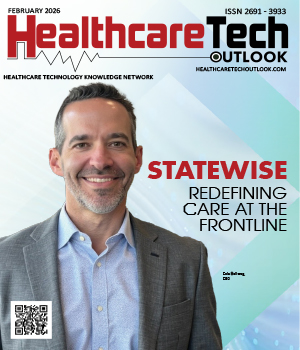
For Cole Ballweg, the challenge was never just building another EHR. It was reconciling two realities that rarely align. Executives need clean claims and financial stability. Frontline caregivers need something simple enough to use in the middle of a long shift. If documentation slows care or introduces compliance risk, both sides lose. That tension shaped Statewise from day one. The company builds Medicaid software specifically for authorized care, guiding documentation, workflows, clinical compliance, and revenue operations through mobile and web tools designed for the people actually doing the work. Most systems try to force Medicaid into platforms designed for commercial payers. Statewise did the opposite. It is built around the way Medicaid agencies actually operate. “We design for the people who don’t sign the contract but carry the burden every day,” says Ballweg. “If the system doesn’t work for them, nothing upstream or downstream works either.” Built for Authorized Care Statewise’s architecture is intentionally simple on the surface and flexible underneath. The goal is to keep the user experience free of complexity while adapting to state-by-state Medicaid rules. Instead of adding custom layers for every request, the team looks for shared patterns across markets and builds solutions that scale without creating technical sprawl. The result is software that adjusts to regulatory variation without becoming harder to use.
AI-powered Mental Health Solutions of the Year 2026
BlissBot.AI
Transforming Mental Health Care with Real-Time AI
Sarah (Yujia) Wang, Founder, CEO & CTO
Mental health challenges rarely arrive with warning. They surface in the quiet hours of the night, during moments of deep uncertainty, or when the world seems distant and support feels out of reach. Yet, most traditional systems remain confined to rigid schedules, limited availability, and access that fail people when they need help the most. This gap between the support needed and the support that arrives has become one of the most pressing issues in emotional health today. BlissBot.AI was built to bridge this gap. The system is designed to provide real-time, AI-driven emotional support, ensuring that people receive help exactly when it’s needed. “Unlike traditional methods that are constrained by time and availability, we operate 24/7, making emotional support accessible at the moments when it matters most,” says Sarah (Yujia) Wang, the founder, CEO, and CTO. Real-Time, AI-Driven System for Emotional Support At the heart of BlissBot is a sophisticated AI system that is designed to offer real-time, context-aware emotional support.

Top Clinical Intelligence Platform 2026

Hospitals today are under significant pressure due to staffing shortages, rising care complexity and increasing costs. This pressure is most visible in ICUs, where clinical decisions must account for rapidly changing patient risk over time. Care teams often rely on fragmented data and momentary alerts, making it difficult to recognize emerging physiologic deterioration. Etiometry addresses this gap by enabling clinicians to see risks earlier and make more confident decisions. A pioneer in delivering real-time clinical intelligence for the ICU, Etiometry moves beyond isolated readings and momentary alerts to provide a continuous, longitudinal view of patient risk. By redefining what clinical intelligence means in modern critical care, the platform serves as an operational layer that helps teams align decisions across shifts, roles and levels of experience without replacing clinical judgment. “Etiometry isn’t just supporting clinicians, it’s elevating the standard of care by turning physiologic complexity into clear, timely and actionable intelligence,” says Shane Cooke, president and chief executive officer. Timely clinical decisions and actions improve patient outcomes while reducing costs. Reported results include up to 36 percent reduction in ICU length of stay, 41 percent decrease in unplanned ICU readmissions, 30 percent reduction in mechanical ventilation time and 29 percent decrease in vasoactive infusion duration.
CXO INSIGHTS

Assess the Feasibility of Implementing the New Software on Existing Medical Imaging Platform
Amy Warengo, Clinical Imaging Manager, Pediatrix Medical Group

Recruitment and Retention in Imaging
Brandon Mullins M. Admin, CNMT (PET), Medical Imaging Director, Banner Gateway Medical Center, Banner MD Anderson Cancer Center, Banner MD Anderson Outpatient Imaging Center

Driving Safety & Innovation in Healthcare
Heather Morris, Director of Clinical Risk Management, West Tennessee Healthcare

Building a Culture of Continuous Learning and Improvement
Erica Gregonis, Chief Medical Officer., Baptist Health System KY & IN

Prioritizing Care for Both Patient and Staff
Pat Jackson, Director, Patient Experience & Advocacy, Huntsville Hospital


IN FOCUS
Navigating the Evolving Landscape of Medicaid EHR Software
Medicaid EHR software is evolving with innovations in interoperability, AI, and machine learning, improving care coordination and reducing costs.

Scaling Intelligent Mental Healthcare through AI Innovation
AI-powered mental health solutions enhance access, personalize care, reduce costs, and drive scalable, data-driven transformation across healthcare ecosystems.
EDITORIAL
Designing the Future of Connected Healthcare
Healthcare delivery is entering a phase where clinical precision, behavioral health access and data continuity must operate in concert. This edition of Healthcare Tech Outlook examines how intelligent platforms are strengthening care coordination, improving patient experience and enabling more informed clinical decisions across the continuum.
BlissBot.AI, recognized as AI-powered Mental Health Solutions of the Year 2026, reflects the growing demand for scalable, accessible behavioral health support embedded within digital ecosystems. Its platform is designed to deliver structured, AI-driven interactions that extend mental health resources beyond traditional settings, enabling continuous engagement and early intervention. By combining responsive automation with guided support frameworks, BlissBot.AI addresses gaps in availability while maintaining consistency in user experience. The company’s focus on measurable engagement and structured care pathways positions it as a practical solution in an environment where demand for mental health services continues to outpace supply.
Among this year’s honorees, Etiometry, awarded Top Clinical Intelligence Platform 2026, advances data-driven decision support in critical care environments by translating complex clinical signals into actionable insights. Statewise, named Top Medicaid EHR Software 2026, addresses structural challenges in public healthcare administration with infrastructure that aligns compliance, reporting and care coordination across Medicaid programs. Zebre, recognized as Top Medical Imaging Platform 2026, strengthens diagnostic workflows through a unified imaging environment designed to enhance accuracy and operational efficiency.
This edition also features perspectives from Pat Jackson, Director, Patient Experience & Advocacy at Huntsville Hospital who emphasizes the operational rigor required to convert patient experience strategies into measurable clinical and service outcomes. Amy Warengo, Clinical Imaging Manager at Pediatrix Medical Group, reinforces the importance of standardized imaging workflows and clinical alignment in driving diagnostic consistency and accountability.
Together, these insights highlight a healthcare sector advancing through disciplined innovation and integrated technology adoption. We invite you to explore the stories and engage with the solutions shaping the future of care delivery.
